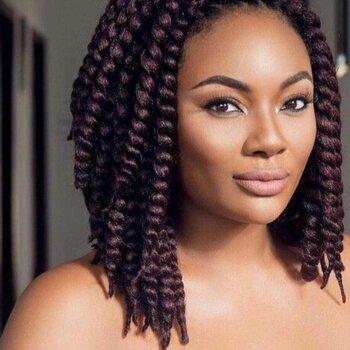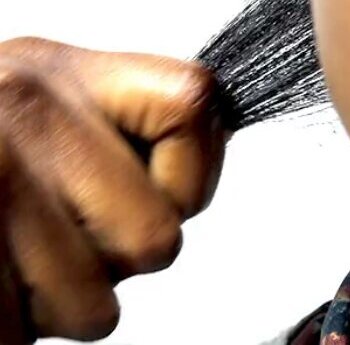

Twists (including two-strand twists) are a popular method for starting your locs. This approach gives you control over the size of your locs, a key difference from the Freeform method where nature determines their development.
It is recommended to use this method for kinky hair. If you are used to it, you can do your twists or two-strand twists by yourself, but it will be less tiring for you to get help, especially if you want the parting to be perfect. Do not neglect this step as it determines the size of your future locks.
If you don't know how to do two-strand twists, here's a video that will help you:
There are other methods such as "Comb coil" or "Comb twist." This involves using a comb to create the twists; this technique requires experience. It is advisable to see a professional:
Expert Advice (Lockslovers Salon)
The Different Stages of Lock Formation Started with Twists or Two-Strand Twists in the First Year
Locks go through three stages: "baby," "teenage," and "mature"
The "baby" phase begins at the start, regardless of hair length. It is characterized by the fragility of the locks in relation to movement and especially water (more particularly for twists, which tend to unravel with each shampoo for about three months). For the starting methods mentioned, this phase lasts between six and nine months. Then comes the "teenage" phase.
During this phase, the locks are "frizzy" or "messy." You might be asked, "What do you have on your head?" This is due to the hair tangling and compacting to form the lock. And this is true regardless of the method.
Advantages and Disadvantages of Starting Locks with Twists or Two-Strand Twists
First, locks started with Comb Twists or two-strand twists form much more slowly and are more fragile than those started with Latching (crochet) for example. Indeed, the hair composing each strand is detangled before being twisted (with two strands and by hand for two-strand twists, with a comb for comb twists), whereas with latching, the hair is tangled, which speeds up the process. Two-strand twists have the advantage, unlike single twists, of requiring much less attention because they do not unravel in water (except for very soft and fine hair), so it is not necessary to rework each lock after shampooing or any contact with water.
Is this Starting Method Suitable for Caucasian Hair?
For Caucasian hair, neither of these two methods is suitable. Indeed, during lock formation, hair tangles and compacts. This is characteristic of kinky hair, not Caucasian hair, which remains straight, so there is no compacting, no locks. In this case, other methods must be used to allow the hair to tangle.